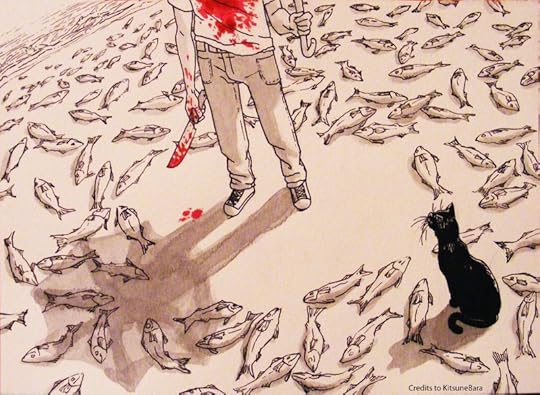
“And once the storm is over, you won’t remember how you made it through, how you managed to survive. You won’t even be sure, whether the storm is really over. But one thing is certain. When you come out of the storm, you won’t be the same person who walked in. That’s what this storm’s all about.”
It’s been almost a decade since I first read “Norwegian Wood” – the book that “1 in 3 Japanese has read”. I did not know he was a famous author at the time, in fact, I only read it because my sister had a copy.
I don’t like “Kafka on the shore”, the same reason that I didn’t like “Norwegian wood”: it feels to me that Murakami always tries to shoehorn in some deep quotes (like the one cited at the beginning of this post) and forces characters to act and talk in the way that provides a context for those quotes to live in.
For what a good novel is, readers can see and understand that the characters act the way they could, should, and reasonably would do at that exact moment, not what the authors want them to do. It just hits different.
What Murakami does well, I think, are his beautiful metaphors and similes: such as “I love you like a bear in spring”, or “the music disappearing like it’s been swallowed up by quicksand”; and his detailed descriptions of everything. Like a scene that lasts a minute can easily occupy 2-3 pages in the book: how’s everyone feeling (with metaphors and similes, of course), their facial expressions, how about the weather, etc. This style reminds me about Dan Brown, whose 600-page books are all about events that happen in a single night.
May be I will get back to Murakami in a different time in my life (read a new book of his, or re-read one). I don’t know, there must be a reason many people love his books, right? To be honest, “Dat is not very bright”.